
Multi Angled Abutment
- Home
- Multi Angled Abutment
Multi Angled Abutment
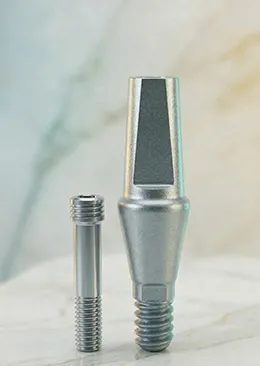
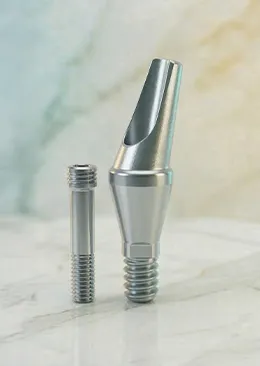
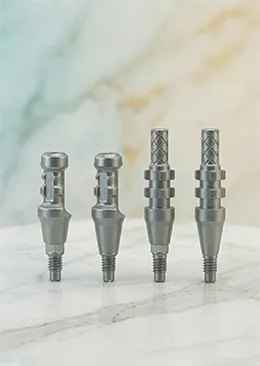
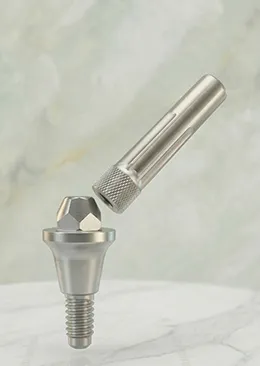
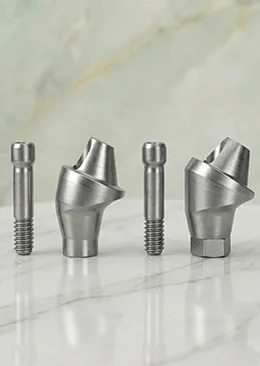
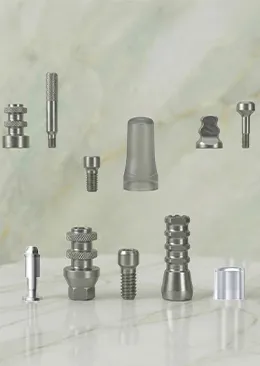
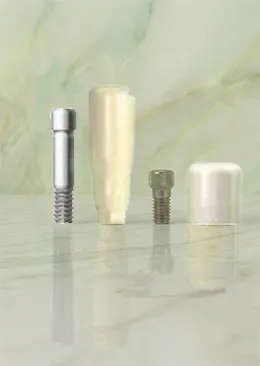
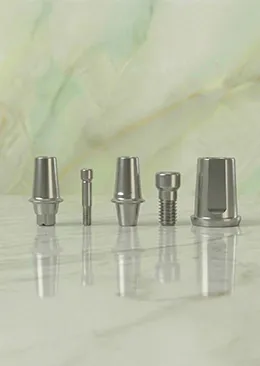
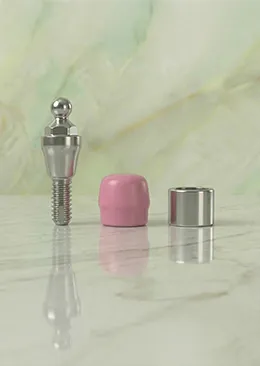
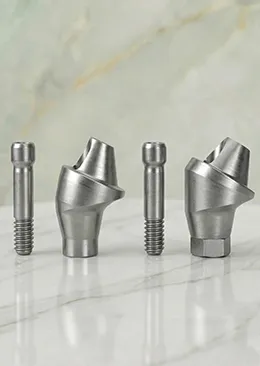
This is an angled intermediate component used primarily in edentulous cases where implants cannot be placed parallel to each other. It corrects the prosthetic emergence angle and ensures a flawless fit for the restoration. This component enables screw-retained prostheses (such as All-on-4 systems) even in challenging bone structures.
Wide Range of Angle and Height Options
Offers 17° and 30° angle options along with 1.5 mm and 3.0 mm "cuff" (neck) heights for various clinical cases.
Connection Diversity
Available in HEX (engaged) for single units and NON-HEX (non-engaged) for multi-unit bridge structures, depending on the restoration type.
Why Matthias Multi Angled Abutment?
Main Reasons
- Aesthetic Solution for Challenging Angles: Even if implants are placed at an incline due to bone deficiency, its 17° or 30° angled structure corrects the prosthetic pathway, providing an aesthetic and functional result.
- High Stability and Force Distribution: In line with the general design philosophy of the Matthias system, it distributes chewing forces balanced across the implant body.
- Compensating for Placement Errors: It tolerates angular deviations occurring during surgery at the prosthetic stage, offering the clinician more flexibility during surgical application.
- Screw-Retained Prosthesis Security: By ensuring perfect fit between components in multi-unit restorations, it helps screw-retained systems maintain a long-lasting and bacteria-proof structure.
Everything You Need to Know
Frequently Asked Questions
What is the connection advantage of the Matthias implant system?
Provides bacterial sealing thanks to the 11-degree Morse Taper connection and completely prevents abutment micro-movements.
How does the implant surface structure affect osseointegration?
Special thread design and "Surface Increaser" technology increase the bone contact surface, accelerating the healing process and maximizing primary stability.
Should different prosthetic parts be used for all diameters?
No. Our system is clinician-friendly; all implant diameters have a single standard connection type, which simplifies stock management and the application process.
What safety does the Atraumatic Apex design provide in surgery?
The spherical tip structure of the implant minimizes the risk of damaging critical anatomical structures such as the sinus floor or nerve channels during placement.
Is it compatible with digital workflow (CAD/CAM)?
Yes. With our Scan Body and Ti-Base options, we support a full digital workflow, providing high-precision restoration opportunities.